Paint Correction · Mobile service
Paint Correction in Greenville, SC
Understand swirls, haze and scratch limits before choosing machine polishing for your vehicle.
What paint correction addresses
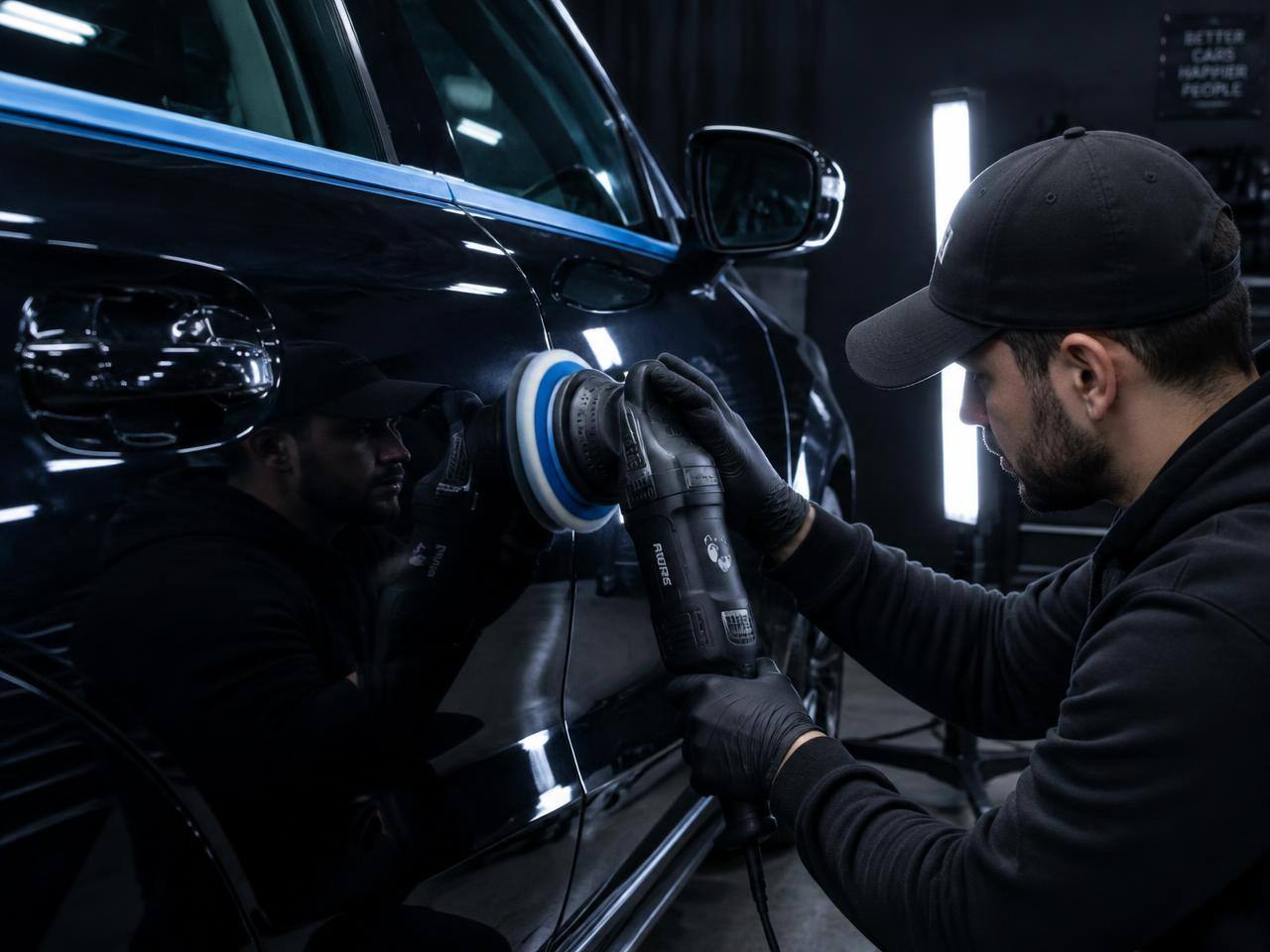
Paint correction uses polishing to reduce suitable defects in the finish. Swirl marks, haze and some shallow scratches can scatter light and make paint appear dull even after washing. Correction addresses the surface rather than simply cleaning dirt off it. It is different from applying a product that temporarily masks marks. The goal is an improvement appropriate to the condition of the paint, not an assumption that every visible defect can or should be completely removed.
Paint has a limited amount of material available for polishing. Deeper scratches, failed clear coat, chips and damage through the finish may need repair rather than correction. Repainted panels and vulnerable edges also call for care. An honest discussion about what can remain is more useful than promising flawless paint from a photograph. If you can see exposed material beneath a scratch, point it out in your request instead of assuming a polishing service will fix it.
When correction makes sense
Consider correction when clean paint still looks hazy, when wash marks are noticeable in sunlight, or when you want to improve the finish before adding protection. Owners preparing a vehicle for sale may also want to address visible surface defects, but polishing is not a guarantee of a higher sale price. Decide which marks bother you and how the vehicle is used. A daily driver and a display-focused car can have different goals, and those goals should be part of the quote conversation.
The general correction process
Correction generally involves cleaning, removal of contamination, assessment of the finish and polishing suited to the defects and paint. Different areas may need different treatment; chasing a deep mark at the expense of the remaining finish is not the same as responsible improvement. This describes the work in general, not Max's confirmed package inclusions or number of polishing stages. MaxShine Detailing quotes correction from $300 to $2,000. Send clear photographs and vehicle information so the proposed work can be discussed for your car.
Before Max assesses your paint
Take both wider and closer photos of the panels you want assessed. Reflections and useful daylight can help show swirls, while a close-up can show the location of a scratch. Tell Max about paint repairs, previous polishing or unusual surface treatments if known. Avoid trying aggressive compounds yourself before the assessment, as that can change the condition and complicate the discussion. Share the service location too. The space and conditions for mobile correction should be agreed directly, rather than inferred from a photograph of the vehicle.
Looking after the corrected finish
Polished paint can collect new marks if washing methods stay abrasive. Keep wash tools and drying towels clean, remove loose contamination before contact washing, and avoid wiping dusty panels dry. Protective products and coatings do not eliminate the need for gentle handling. Ask what, if any, protection is included in the agreed correction work, and follow the care directions for that protection. Ceramic coating is a separate service to discuss, not an automatic inclusion. Maintaining good habits matters more than expecting the correction to prevent all future wear.
Ready when you are.
4.9 on Google (18 reviews)
Send a request and Max will reach out to confirm.
Or call (717) 925-5434
FAQ
Paint Correction questions
No. Polishing cannot replace missing paint. Damage through the finish may require repair, while some shallow defects can improve. Share close-up photos so the discussion starts with the actual damage rather than a blanket promise.
Related