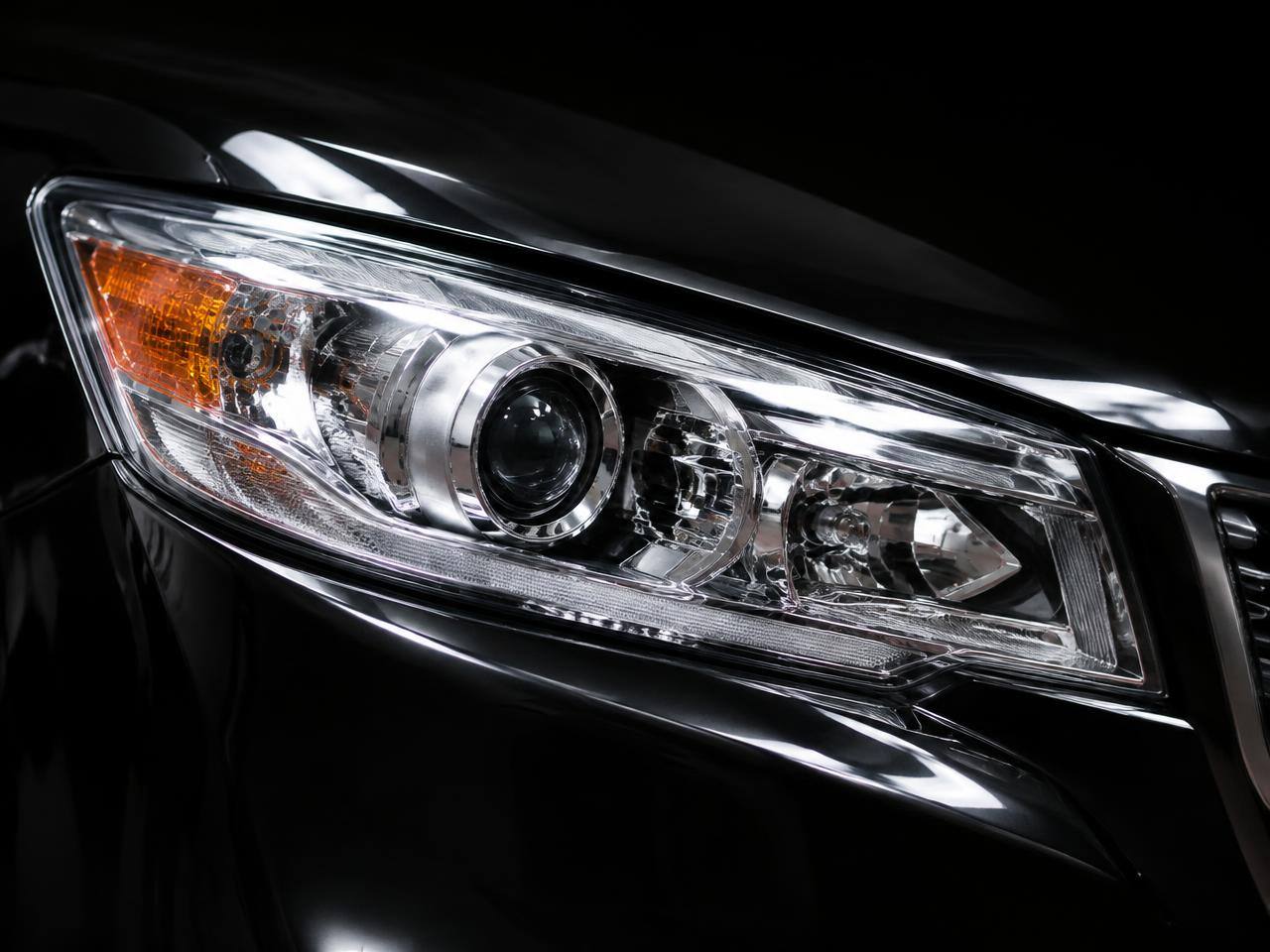
Headlight Restoration · Mobile service
Headlight Restoration in Greenville, SC
Understand cloudy lenses and the limits of surface restoration before choosing the work.
Why headlight lenses become cloudy
Many headlights have plastic outer lenses exposed to sunlight, road debris and cleaning contact. As the surface deteriorates it can appear yellow, hazy or cloudy, even when the rest of the car is clean. Headlight restoration addresses suitable deterioration on that exterior lens surface. MaxShine Detailing offers the service for $140 through Request a Time. Restoration is different from a normal exterior wash: removing dirt from a lens does not necessarily remove the degraded layer that makes it look cloudy.
Lens condition is only one part of a working headlight. A failed bulb, internal condensation, a cracked housing, electrical trouble or incorrect aim cannot all be resolved by polishing the outside. If you have a lighting fault, describe it separately and consider the appropriate repair. This service is not represented as a mechanical diagnosis or a substitute for a functioning headlight assembly. Distinguishing surface haze from internal or structural damage helps you avoid requesting restoration for a problem it cannot address.
When surface restoration is worth discussing
Restoration may suit an owner whose lenses have visible exterior yellowing or haze and who wants that surface assessed. It can also be a separate presentation concern on a car whose paint and cabin already meet the owner's needs. Check whether the cloudiness seems outside, inside, or associated with a crack, and photograph it clearly. Do not assume every cloudy lens is restorable, or that a clear appearance proves the light is functioning correctly. Explain any condensation or known housing damage when you send the request.
How restoration generally differs from washing
In general, lens restoration removes or refines deteriorated surface material and then addresses protection suitable for that surface. Surrounding paint and trim need consideration, and the lens condition determines what work is appropriate. The final protection matters because polishing alone does not establish how the exposed lens will be maintained. These are general restoration principles, not a guarantee of Max's exact steps, number of lenses or protection product. Confirm the scope of the $140 service and identify the vehicle before the visit is agreed.
Before the headlight visit
Send the vehicle year, make and model and note previous restoration or protective film if you know about it. Take photos showing the whole light and closer views of the affected surface. Tell Max about cracks, peeling, moisture inside the housing or lighting faults rather than letting those details be mistaken for exterior haze. Avoid experimenting with abrasive household treatments before assessment. Provide the service address and discuss access to the front of the vehicle. Max confirms the requested time and any preparation directly by call or text.
Care of the restored lens
A restored lens should be cared for according to the protection and method actually used. Avoid aggressive cleaners or abrasive scrubbing without checking their suitability, and do not assume the same instructions apply to every restoration process. Look for new damage, internal moisture or a lighting issue separately from routine surface dirt. If a concern develops, describe what changed rather than repeatedly polishing the lens yourself. This page makes no durability, illumination measurement or warranty promise; service-specific directions need to come from Max for your agreed work.
Ready when you are.
4.9 on Google (18 reviews)
Send a request and Max will reach out to confirm.
Or call (717) 925-5434
FAQ
Headlight Restoration questions
A wash can remove surface dirt, but exterior deterioration may remain. Restoration addresses a different surface condition. Show the lens to Max so dirt, haze and damage are not all treated as the same problem.
Related